Rootsware
Hammered Copper Samovar Teapot Set Vintage — Decorative
Hammered Copper Samovar Teapot Set Vintage — Decorative
Couldn't load pickup availability
hammered vintage copper samovar style teapot set — decorative and functional
The samovar-style copper teapot occupies a specific space in Turkish and Middle Eastern material culture — not a working samovar for heating water over charcoal, but a decorative copper vessel in the samovar aesthetic: the tall, ornate form that signals hospitality, abundance, and the tradition of continuous tea service. The hammered surface texture on this set carries the mark of handcraft — the slight variations in the hammer marks across the copper body give it the visual depth that machine-pressed metal cannot replicate.
Vintage copper pieces of this kind are displayed on open shelves, brought out for special occasions, and used to serve tea from a tray when presentation is part of the gesture. The hammered finish develops a patina over time that adds character rather than diminishing it.
For functional electric samovars, browse our electric samovar collection.
Specifications
- Material: Copper — hammered finish
- Style: Samovar-inspired decorative teapot set
- Finish: Hammered — develops patina over time
Curated by Rootsware · Crafted in Anatolia
Why We Selected This Piece
At Rootsware, we carry handmade copper from Anatolian coppersmiths because copper is not a trend in Turkish and Middle Eastern kitchens — it is the original material. The hammered texture on these pieces is not decorative: it increases surface area for more even heat distribution. We selected pieces from established Anatolian workshops where copper is still worked by hand, the way it has been for centuries in Gaziantep, Diyarbakır, and the covered bazaars of Istanbul.
Care & Cleaning
- Hand-wash only with warm water and mild soap. Never put copper in a dishwasher — the heat and detergents damage the surface and the tin lining.
- Dry immediately after washing — standing water causes spotting and accelerates tarnish.
- The exterior will develop a natural patina over time. To restore the bright copper finish, polish with a copper cleaner or a mixture of lemon juice and salt.
- Do not use abrasive scrubbers on the interior lining.
- Not suitable for induction cooktops. Compatible with gas and electric coil stovetops.
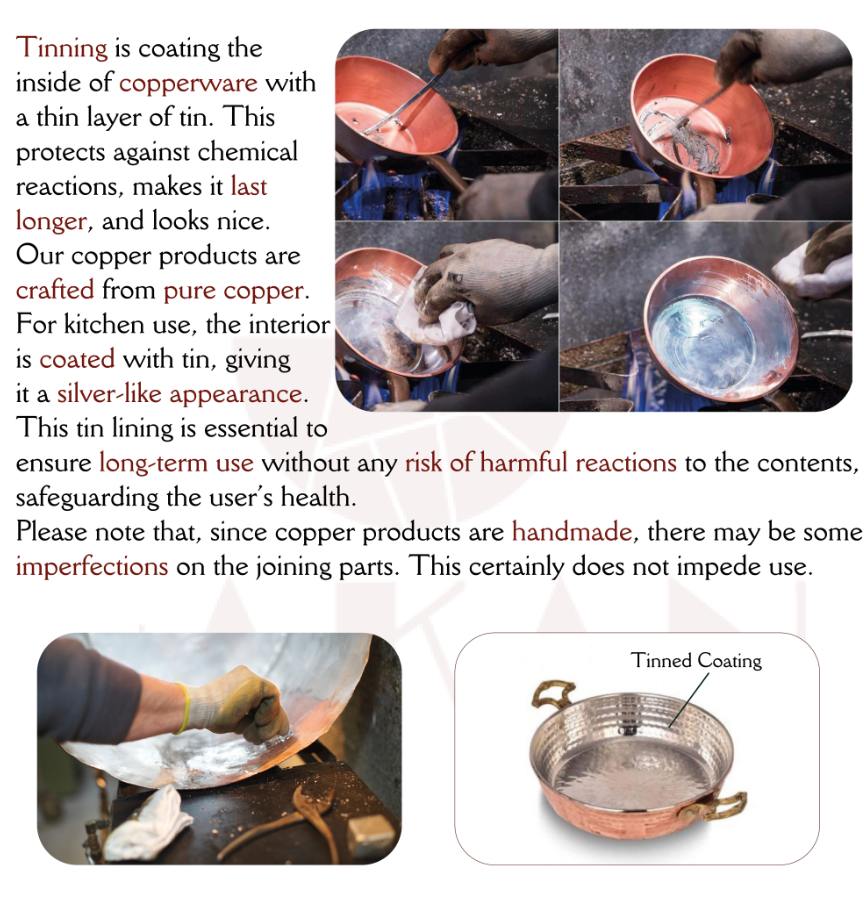
About the Tin Lining
The interior of these copper pieces is tin-lined (or stainless-lined on select items). The lining is what makes copper safe for direct food contact — bare copper reacts with acidic foods. With regular use, the tin lining will wear gradually over years. When it becomes thin or scratched through to the copper, the piece should be re-tinned by a coppersmith. This is normal and expected — it is part of the lifecycle of a well-used copper piece, not a defect.
Frequently Asked Questions
Is copper cookware safe?
Yes, when lined. The tin or stainless steel interior prevents direct food contact with copper. Unlined copper is only safe for specific uses (egg whites, jam-making) where the reaction is controlled. All cookware in this collection is properly lined.
Can I use it on an induction stove?
No. Copper is not magnetic and does not work on induction stovetops. Use an induction adapter disc if needed, or use on gas or electric coil.
Why does my copper piece look different from the product photo?
Because each piece is handmade. The hammer marks, surface texture, and patina vary from piece to piece — this is the nature of handcraft, not inconsistency. Your piece is unique.
How do I remove tarnish from copper?
Apply a paste of equal parts lemon juice (or white vinegar) and salt to the exterior surface. Rub gently, rinse thoroughly, and dry immediately. For stubborn tarnish, use a commercial copper polish. Never apply polish to the interior lining.
How long does copper cookware last?
Properly cared-for copper cookware lasts generations. The pieces in bazaars across Turkey and the Middle East are often decades old. The investment is in something that outlasts most modern cookware by a factor of ten.
Share